When a project needs a sheet material that is lightweight, workable, moisture-resistant, and suitable for printing, decoration, fabrication, or interior components, PVC Foam Board offers a useful combination of properties. Its expanded structure can reduce weight compared with solid plastic sheet, while different manufacturing structures and formulations allow the material to be matched with different end uses.
01 · Material Fundamentals
What Defines This Expanded Sheet Material?
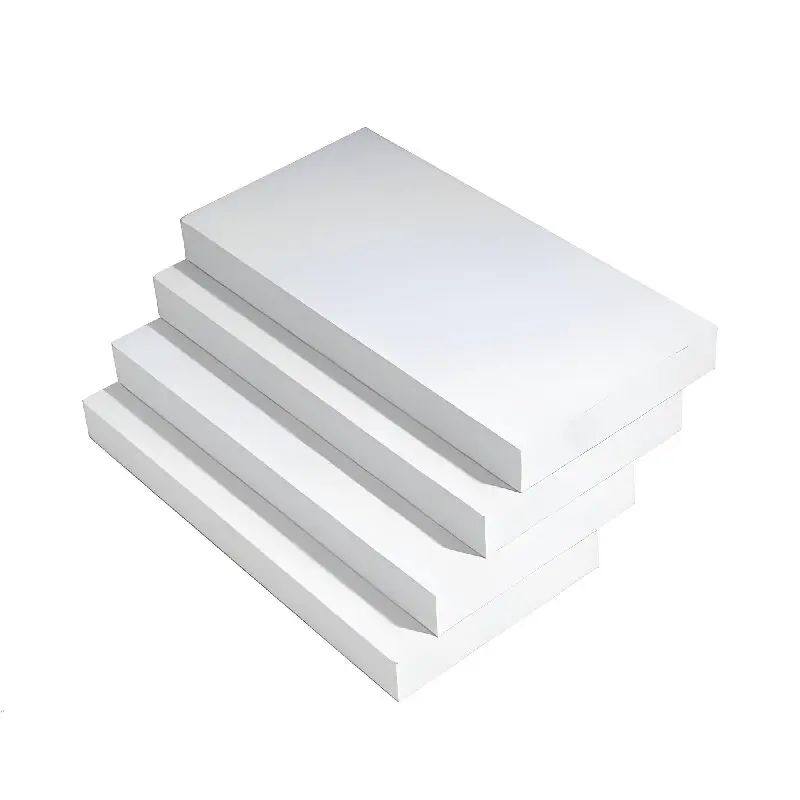
An expanded PVC sheet is produced by processing PVC resin into a foamed cellular structure. Instead of forming a completely solid plastic sheet, the manufacturing process creates a material containing internal cells. This structure helps reduce the overall weight of the sheet while maintaining a useful degree of rigidity for fabrication and installation.
The exact construction can vary considerably. Free-foam, Celuka, and co-extruded structures do not have identical surface characteristics or internal density. For that reason, the general material category should be viewed as a family of related products rather than a single universal specification.
Weight Reduction Without Moving to a Flexible Film
One practical advantage of a foamed sheet is the balance between weight and rigidity. The cellular structure reduces the quantity of solid polymer contained in a given volume, making large panels easier to handle in many fabrication environments.
This can be useful during cutting, drilling, routing, printing, mounting, and installation. Large-format sign panels and decorative components can be fabricated without the handling characteristics associated with much heavier rigid substrates.
Cellular Core The foamed internal structure helps reduce weight while preserving a workable sheet form.
Machinable Surface Sheets can be cut, drilled, routed, printed, laminated, and assembled for different fabrication requirements.
Multiple Structures Free-foam, Celuka, and co-extruded constructions provide different combinations of hardness, surface quality, and durability.
Why Surface Quality Matters
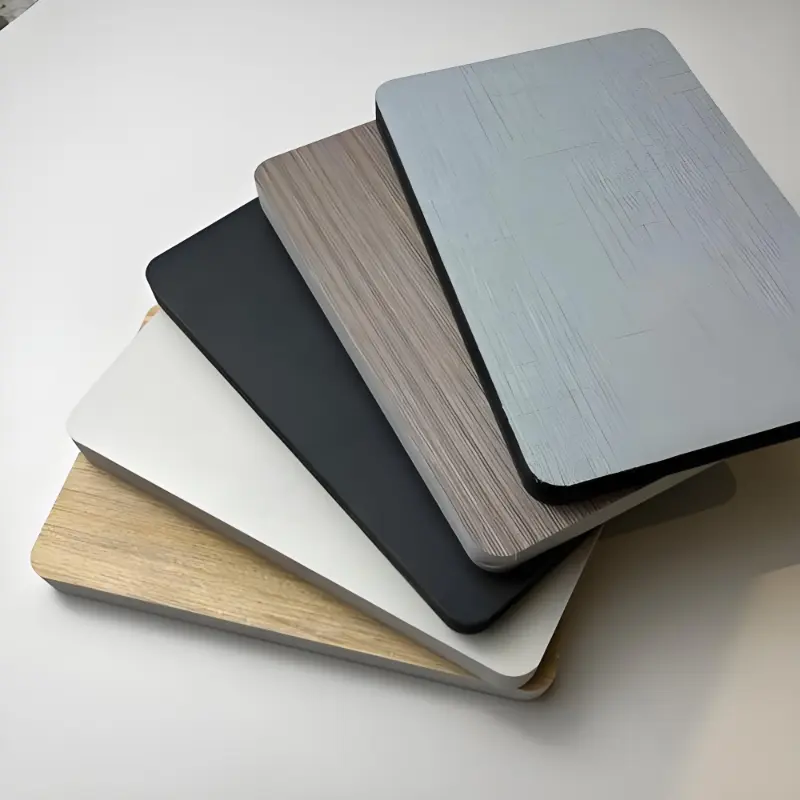
For visual applications, the surface can be just as important as the core. A smooth and stable face can provide a suitable base for direct printing, digital graphics, lamination, or decorative treatment. A wood-grain or textured finish, by comparison, may be selected because the surface itself contributes to the final appearance.
In furniture and interior fabrication, surface quality also influences how the finished component looks after cutting and edge treatment. A board chosen only because it is lightweight may behave differently from a denser board selected for increased surface hardness and stability.
Practical point: Material selection should begin with the finished component rather than thickness alone. Consider rigidity, surface finish, processing method, environment, and appearance before choosing a board structure.
02 · Construction
How Does Board Structure Affect Performance?
Manufacturing structure has a direct relationship with how a panel feels, processes, and performs. The same PVC-based sheet family can include products intended primarily for graphics and others designed for more demanding fabricated components.
Free-Foam Construction
Free-foam board generally has a more uniform cellular structure throughout the thickness. The surface can have a softer feel than denser alternatives, making this construction useful for advertising, displays, decoration, and projects where low weight and straightforward processing are important.
Because the material can be machined into different shapes, fabricators can produce letters, panels, display elements, backing boards, and decorative forms. Surface treatment can then be applied according to the visual requirements of the finished product.
Celuka Construction
Celuka construction is associated with a denser outer surface and a more rigid overall board. The harder skin can make this structure useful for furniture parts, cabinets, interior components, and applications where the surface needs a more substantial feel.
The denser surface can also provide a useful base for machining and finishing. Actual processing results still depend on board thickness, tooling, cutting geometry, machine settings, and production conditions.
Co-Extruded Construction
Co-extruded construction can combine a harder exterior layer with a lighter foamed core. This approach is useful when a project needs an improved surface while retaining some of the weight advantages associated with a cellular core.
Co-extruded products can be considered for applications requiring improved durability, UV resistance, and weather resistance, including higher-performance signage, furniture, and architectural decoration. Outdoor performance should always be evaluated against the exact grade, finishing method, installation system, and exposure conditions.
|
Structure
|
Typical Surface Character
|
Common Application Direction
|
Key Selection Consideration
|
|
Free-foam
|
Softer, relatively uniform structure
|
Advertising, displays, decoration
|
Weight, ease of processing, surface finishing
|
|
Celuka
|
Smoother and harder outer surface
|
Furniture, cabinets, construction, interiors
|
Surface hardness, rigidity, machining requirements
|
|
Co-extruded
|
Harder outer layer over a foamed core
|
Signage, furniture, architectural decoration, selected outdoor uses
|
Surface durability and environmental exposure
|
These distinctions explain why two boards that appear similar in a catalog may behave differently during fabrication. A sign maker may prioritize print quality and surface smoothness, while a furniture fabricator may place greater emphasis on hardness, edge quality, rigidity, and fastening behavior.
03 · Product Variations
What Are the Main Product Variations?
Product classification can also be based on calcium content, color, surface finish, and specialized construction. These differences are practical because formulation and surface treatment can influence weight, rigidity, flexibility, appearance, and suitability for secondary processing.
Low-Calcium and High-Calcium Formulations
Low-calcium formulations contain a higher proportion of PVC relative to mineral filler. These boards are generally positioned as lighter and more flexible, making them suitable for advertising, displays, and projects where surface quality is particularly important.
Higher-calcium formulations contain a greater proportion of calcium content and are generally harder and heavier. They can be used in construction and furniture-related applications where a more substantial board character is desirable.
The correct formulation should be selected according to the finished product rather than calcium content alone. A display panel, cabinet component, decorative wall section, and fabricated sign can all require different material characteristics.
White, Colored, and Wood-Grain Surfaces
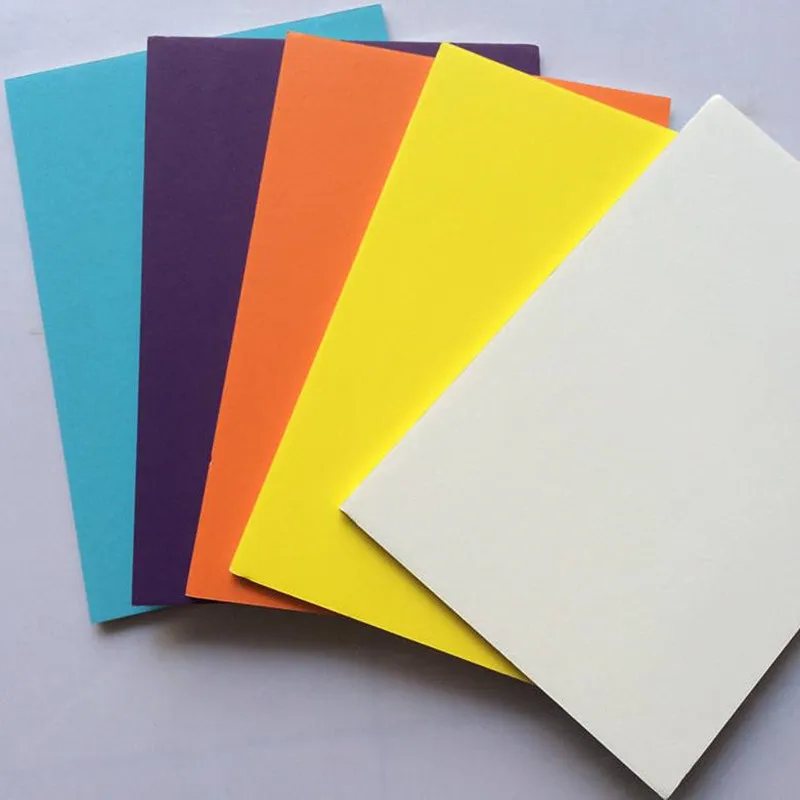
White boards are particularly useful for printed graphics and decorative work because the neutral surface provides a clean base for visual treatment. Colored boards can be selected when the exposed sheet itself contributes to the finished appearance.
Wood-grain surfaces provide another decorative option for furniture and interior projects. Instead of relying solely on subsequent painting or printed decoration, the board surface itself can become part of the visual design.
-
White surfaces can provide a clean base for printing, lettering, and decorative finishing.
-
Colored surfaces can help reduce additional finishing steps when the board surface is visible.
-
Wood-grain surfaces can support furniture and interior projects where a decorative appearance is required.
-
Surface selection should be considered together with the final fabrication method and installation environment.
Specialized Variants for Specific Requirements
Specialized grades can be developed around particular finishing or environmental requirements. Waterproof structures, for example, are described as closed-cell boards with low water absorption and moisture resistance, making them relevant to signage, interior decoration, and furniture-related applications where moisture exposure is a concern.
Calcium-free formulations represent another product direction. They can be used for construction, furniture, advertising, and industrial applications where lightweight structure, stability, and machinability are important considerations.
Film-coated products add a decorative film layer to the foamed core. Lamination can provide richer colors, textures, and additional surface protection, which makes this configuration relevant to furniture, advertising displays, interior decoration, and renovation-related work.
These variations highlight a key selection principle: a sheet should be matched to a defined application requirement. Choosing only from a broad category name may overlook meaningful differences in structure and surface treatment.
04 · Application Engineering
Where Is the Material Commonly Used?
The versatility of expanded PVC sheets comes from the combination of low weight, machinability, moisture resistance, surface options, and multiple construction types. These characteristics allow the material to serve applications ranging from visual communication to interior fabrication and selected industrial uses.
Signage and Advertising
Signage is one of the best-known application areas. Sheets can be converted into flat signs, display panels, letters, point-of-purchase structures, graphic boards, and promotional elements.
For printing applications, surface smoothness and color are particularly important. White material can provide a clean background for graphics, while the relatively low weight of the finished panel can simplify handling and mounting.
Interior Decoration
Interior projects can use the material for wall panels, decorative elements, partitions, ceilings, and fabricated interior features. In these applications, appearance and dimensional stability may be as important as basic material properties.
Wood-grain and film-coated surfaces can produce different decorative effects without relying entirely on paint or subsequent graphic treatment. The board should still be evaluated for humidity, installation method, fastening, and expected mechanical loads.
Furniture and Cabinet Components
Furniture fabrication often requires a material that can be cut and drilled cleanly while maintaining adequate rigidity. Higher-density structures can be considered when the surface needs greater hardness and the finished part needs a more substantial feel.
Cabinet panels, decorative inserts, interior partitions, table-related components, and fabricated furniture elements are among the application directions associated with this material family. Final design should consider span, support points, fastening method, and edge treatment rather than thickness alone.
Construction and Decorative Components
Construction-related uses can include wall panels, ceilings, partitions, and decorative materials. These applications may benefit from machinability, moisture resistance, and lightweight sheet construction.
For components subject to specific fire, structural, environmental, or regulatory requirements, project specifications must be checked against the exact product grade and applicable standards. A general material category should not be treated as proof that every board meets every building requirement.
Industrial, Automotive, and Marine Uses
Industrial applications can involve moisture-resistant or chemical-resistant requirements, including selected laboratory-related equipment. Automotive and marine applications can also involve lightweight interior or fabricated components.
These projects typically require more detailed engineering because temperature, chemical exposure, vibration, impact, fastening, and environmental conditions may differ substantially. Material compatibility should therefore be evaluated against actual operating conditions.
Visual Projects Signage, printed panels, point-of-purchase displays, lettering, decorative boards, and promotional structures.
Interior Projects Wall panels, partitions, decorative surfaces, furniture components, cabinets, and renovation elements.
Specialized Projects Selected industrial, automotive, marine, and moisture-sensitive applications where the specific grade is appropriate.
05 · Fabrication Guide
How Should the Board Be Processed?
Machinability is one of the reasons PVC-based foamed sheets are widely used in fabrication. Cutting, drilling, routing, engraving, printing, laminating, and fastening can be integrated into different production workflows. Good results depend on matching the process to the material structure and tooling.
Cutting
Clean cutting starts with suitable sheet support and appropriate tooling. The board should remain stable during the cut so excessive movement does not create rough edges or dimensional variation.
For repeated production, consistent feed speed, tool condition, and machine settings help maintain predictable results between production runs.
Drilling and Routing
Drilling and routing are useful when a panel requires holes, slots, cable openings, recesses, or shaped edges. Tool geometry, spindle speed, feed rate, and chip removal all influence the final result.
A component containing many small openings may require more careful support than a simple rectangular panel. Excessive heat generation can also influence the edge, so production teams should establish suitable settings using the actual board grade and thickness.
Printing and Lamination
Smooth white surfaces are frequently selected when direct printing is required. Lamination can add decorative effects, protective layers, or textures.
Before a high-volume print run, the surface should be checked for cleanliness and compatibility with the selected ink, adhesive, film, or finishing system. Preparation requirements can vary between products and surface treatments.
Fastening and Assembly
Sheets used in furniture, display systems, and fabricated structures may be joined using mechanical fasteners, adhesives, profiles, or other assembly techniques. Because foamed structures behave differently from solid plastic, fastening locations and edge distances should be designed around the actual application.
-
Confirm the board structure, thickness, surface finish, and intended application before machining.
-
Prepare clean and stable support for cutting, drilling, routing, or engraving.
-
Use tooling and machine settings appropriate to the material density and thickness.
-
Inspect edges, holes, and finished surfaces during the first production pieces.
-
Standardize proven processing parameters before repeat production.
Fabrication principle: Processing control becomes especially important when several board structures are used in the same workshop. Machine settings that work well on one formulation may not provide the same result on another.
06 · Buying Criteria
How Can Buyers Match the Board to a Project?
For B2B buyers, material selection is rarely just a question of choosing thickness. A more reliable approach is to identify the finished component, fabrication process, environment, and appearance requirements first, and then select the board construction that supports those needs.
Start With the Finished Product
A sign panel and a cabinet door may both be made from rigid sheet, but their functional requirements are different. The sign may prioritize surface print quality and light handling weight, while the furniture component may require more rigidity, surface hardness, edge quality, and fastening stability.
Defining the finished product gives the manufacturer a clearer basis for discussing structure and thickness. It also reduces the risk of choosing a specification that fits the dimensions but does not perform well during fabrication or installation.
Evaluate the Working Environment
Indoor applications generally present different conditions from semi-outdoor or outdoor installations. Moisture, sunlight, temperature changes, cleaning chemicals, physical contact, and installation conditions can all affect material suitability.
For applications involving long-term outdoor exposure, the precise UV and weather resistance of the selected product should be verified. A general description of the material family is not a substitute for product-level evaluation.
Consider the Surface Finish at the Design Stage
Surface selection should be made before fabrication rather than after machining. A white board for printing, a colored sheet for visible decorative surfaces, a wood-grain board for furniture, and a film-coated sheet for textured appearance can all require different production decisions.
Planning the surface treatment early can also reduce unnecessary secondary processing. A decorative surface may already provide the desired visual effect, while a plain board may require additional finishing steps.
Check Compatibility With Downstream Processing
When requesting a specification, manufacturers and fabricators should communicate the actual production method. Important details can include CNC routing, saw cutting, drilling, printing, lamination, edge finishing, bonding, or mechanical assembly.
The more clearly the downstream process is defined, the easier it becomes to evaluate whether density, thickness, surface structure, and dimensions are appropriate.
|
Project Requirement
|
Questions to Ask
|
Selection Focus
|
|
Low handling weight
|
Will large panels be frequently moved or manually installed?
|
Density, thickness, and overall panel dimensions
|
|
High surface quality
|
Will the surface be printed, laminated, or directly displayed?
|
Surface smoothness, consistency, and color
|
|
Furniture fabrication
|
Will parts be drilled, routed, joined, or frequently handled?
|
Rigidity, surface hardness, and edge behavior
|
|
Moisture exposure
|
Will the panel encounter humid or wet conditions?
|
Water absorption, cell structure, finishing, and installation
|
|
Outdoor use
|
How long and under what conditions will the panel be exposed?
|
UV resistance, weather resistance, and grade-specific performance
|
|
Decorative appearance
|
Should the board itself provide the finished visual effect?
|
Color, wood grain, film coating, and surface texture
|
For B2B procurement, consistency is another important consideration. Once a specification has been proven in production, keeping the structure, thickness, dimensions, surface finish, and processing requirements clearly documented can make repeat manufacturing more predictable.
07 · Use and Care
What Handling and Maintenance Practices Matter?
Although PVC-based foamed sheets are designed for practical fabrication and everyday applications, suitable handling helps protect the final surface and dimensions. Maintenance requirements are generally straightforward, but the method should take the surface treatment and installation environment into account.
Store Sheets on a Stable Surface
Large sheets should be supported adequately during storage so prolonged uneven loading does not contribute to unwanted distortion. Keeping the material clean and protected can also reduce scratches, contamination, and surface damage before fabrication.
Protect the Finished Surface
Printed, laminated, coated, and decorative surfaces can have different cleaning requirements. Abrasive tools, unsuitable solvents, or aggressive chemicals can change the appearance of a finished surface even when the underlying material remains intact.
For routine cleaning, use a method compatible with the specific surface treatment. In visible interior installations, testing a cleaning method on a small non-visible area can help reduce the risk of unwanted changes in gloss, color, or texture.
Review Mechanical Loads
Applications involving shelves, tables, cabinets, partitions, mounted displays, or structural-looking panels should be designed around actual support conditions. Thickness is only one factor. Span, support location, geometry, fastening method, and repeated loading can also affect finished performance.
-
Keep stored sheets adequately supported and protected from unnecessary surface damage.
-
Use cleaning and maintenance methods compatible with printed or laminated surfaces.
-
Consider support points and fastening methods for furniture and fabricated components.
-
Review environmental exposure before using a board in demanding outdoor conditions.
08 · FAQ
Frequently Asked Questions
What is an expanded PVC sheet used for?
It is used for signage, advertising displays, interior decoration, furniture and cabinet components, construction-related panels, and selected industrial, automotive, and marine applications. Suitability depends on the structure, surface, thickness, environment, and processing method.
Is free-foam board the same as Celuka board?
No. They are different structures. Free-foam board generally has a more uniform foamed structure and softer surface, while Celuka construction has a denser and harder outer surface. Their processing behavior and preferred applications can therefore differ.
Which structure is more suitable for furniture applications?
Furniture projects often consider denser structures such as Celuka because surface hardness and rigidity can be important. However, the final choice still depends on the component design, thickness, support conditions, fastening method, and required finish.
Can the material be printed directly?
Many smooth surfaces can be used for direct printing, particularly white surfaces intended for signage and display work. Before production, the actual board surface and selected printing system should be checked for compatibility.
Are colored and wood-grain versions available?
Yes. Available product directions can include white, colored, and wood-grain surfaces. Wood-grain products are commonly directed toward furniture and interior design, while colored sheets can be selected where the exposed surface contributes to the visual result.
What is the difference between low-calcium and high-calcium formulations?
Low-calcium formulations generally have a higher proportion of PVC and a lighter, more flexible character, while higher-calcium formulations are generally harder and heavier. The appropriate formulation depends on the required rigidity, surface quality, handling characteristics, and end use.
Can the material be used in wet or humid environments?
Some grades are specifically developed for moisture-resistant applications. Closed-cell waterproof structures, for example, are described as having low water absorption and moisture resistance. For prolonged exposure, the exact grade and installation system should be evaluated.
Is a thicker sheet always better for a fabricated component?
No. Thickness is only one factor. Density, structure, span, support points, geometry, fastening, surface requirements, and expected loads also influence finished performance.
What should a buyer specify when requesting product information?
A clear request should identify the intended application, structure if known, thickness, sheet dimensions, color or surface finish, required processing, and expected operating environment. These details give the manufacturer a practical basis for discussing the appropriate configuration.
Key Takeaways
How Should the Final Material Choice Be Approached?
The most practical way to select an expanded PVC sheet is to connect material properties with the actual finished application. Lightweight construction can simplify handling, while different core and surface structures can change rigidity, hardness, appearance, and processing behavior.
For signage and advertising, surface quality, color, print compatibility, and weight may be central considerations. For furniture and cabinets, rigidity, surface hardness, edge processing, and fastening may receive greater attention. For interiors, decorative appearance and dimensional stability can become more important. For moisture-prone or outdoor applications, water absorption, UV exposure, weather resistance, and specific product-grade performance deserve closer evaluation.
A clear specification also improves communication between buyers, manufacturers, and fabricators. Rather than specifying a generic board alone, define what the finished panel must do, how it will be processed, where it will be installed, and what appearance it must provide. This creates a stronger basis for material selection and repeat production.
-
Choose the structure according to the required combination of surface quality, rigidity, weight, and durability.
-
Match calcium content and density to the actual fabrication and application requirements.
-
Consider color, wood grain, film coating, or other surface options during the design stage.
-
Confirm suitability for moisture, sunlight, chemicals, temperature variation, and mechanical loads when relevant.
-
Document the proven specification carefully for repeat B2B production.
Need to Discuss a Specific Sheet Requirement?
Share the application, dimensions, thickness, surface finish, processing method, and operating environment so the appropriate material configuration can be evaluated around the actual project requirements.
Contact us for product and project requirements
Back to the top