

Selecting the right cladding or decorative material requires more than comparing colors and surface appearances. Aluminum Composite Panel is available in different core compositions, coating systems, surface finishes, and structural specifications. Each variation serves different functional and environmental requirements. Understanding these differences helps architects, contractors, signage manufacturers, and material distributors identify suitable products for their projects.
This guide explores panel construction, material classifications, coating performance, fire-related considerations, application environments, fabrication requirements, and practical selection criteria. It also explains which technical details should be confirmed before specifying a product for an architectural or commercial project.
- 1. Understanding the Basic Structure
- 2. Different Types and Classifications
- 3. Surface Coatings and Their Functions
- 4. Fire Performance and Core Materials
- 5. Applications Across Different Industries
- 6. Important Technical Specifications
- 7. Fabrication and Installation Considerations
- 8. How to Select the Right Product
- 9. Maintenance and Service Life
- 10. Frequently Asked Questions
01 Understanding the Basic Structure
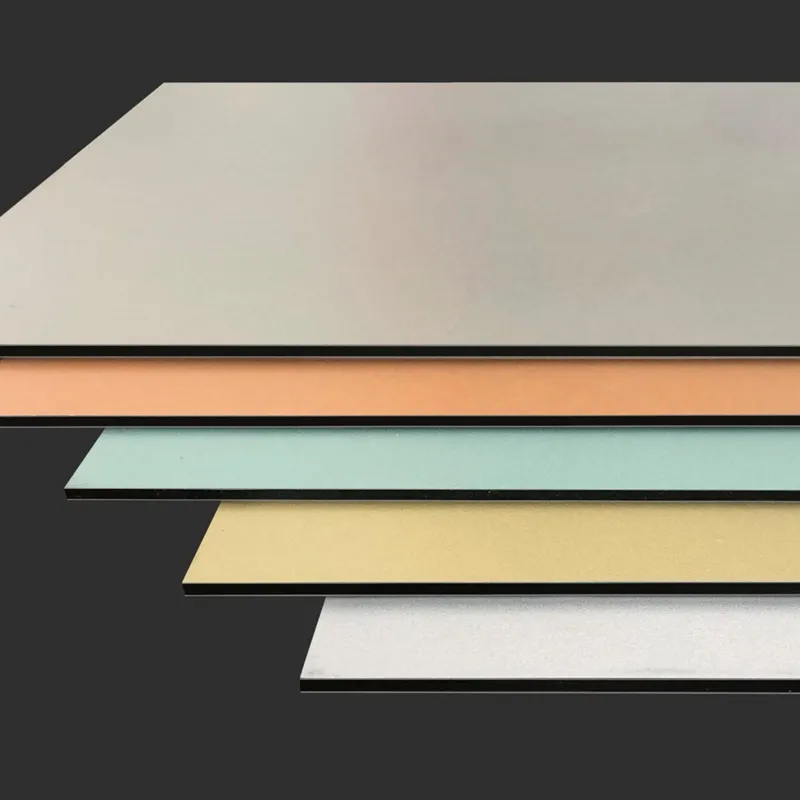
An aluminum-plastic composite panel is a multilayer material designed to combine the characteristics of metal surfaces with the functional properties of a central core. Its construction makes it suitable for architectural decoration, commercial displays, signage, and various interior applications.
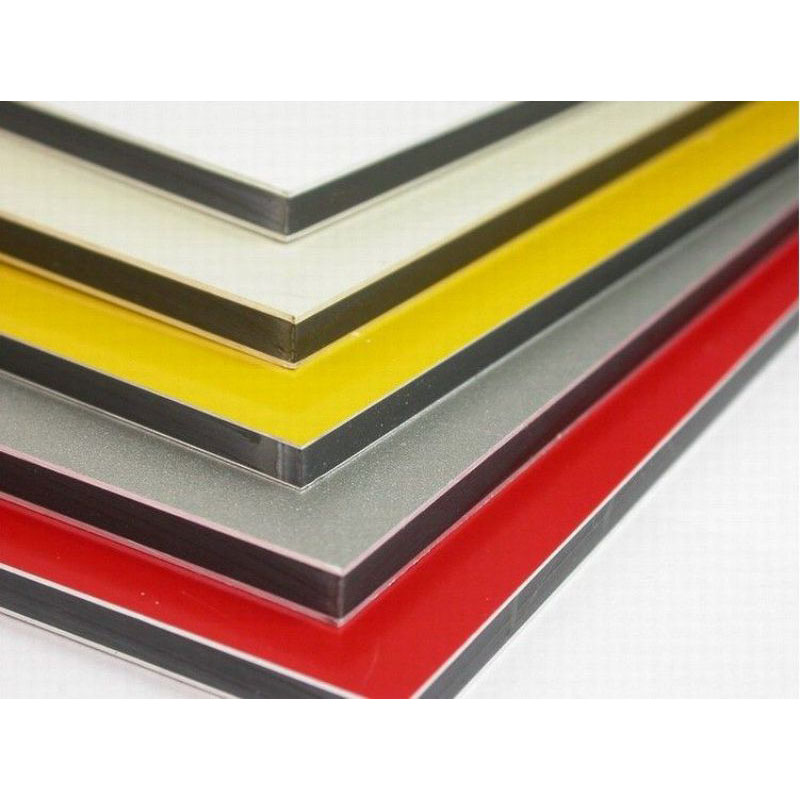
The typical structure consists of two aluminum sheets bonded to a central core through an adhesive or bonding layer. The outer aluminum surface provides a metallic appearance and a base for decorative coatings, while the core contributes to the panel's overall thickness and structural configuration.
Three Main Structural Components
1. Front aluminum skin: The outer sheet forms the visible surface. Its alloy, thickness, pretreatment, and coating system influence appearance, surface protection, and fabrication characteristics.
2. Core material: The central layer separates the aluminum skins and contributes to the panel structure. Depending on the product, the core may contain polyethylene-based material or mineral-filled fire-retardant compositions.
3. Rear aluminum skin: The back sheet completes the sandwich structure. Its material thickness and protective treatment are relevant to panel stability and the intended fabrication method.
Why Is the Sandwich Structure Important?
The composite configuration provides a relatively lightweight panel format compared with many solid metal alternatives of similar overall dimensions. It also offers a flat surface suitable for decorative finishes, printed graphics, and architectural detailing.
However, the structural composition should always be evaluated alongside the intended application. A decorative panel used for an indoor display does not automatically meet the requirements of a building exterior or a regulated facade assembly.
When reviewing a technical datasheet, check the aluminum alloy, front and rear skin thicknesses, core composition, total thickness, coating type, and applicable test documentation. These details provide a more meaningful understanding of the material than its appearance alone.
02 Different Types and Classifications
Composite panels can be categorized according to their core materials, surface coatings, decorative treatments, and intended applications. These classifications are important because products that look similar may have different technical characteristics.
Classification by Core Composition
Core composition is one of the most important differences between product types. Standard polyethylene cores are commonly associated with general decorative applications, while mineral-filled or specially formulated fire-retardant cores are developed for projects with additional fire-performance requirements.
- PE core panels: Generally used for indoor decoration, signage, and applications where the specified fire classification permits their use.
- Fire-retardant core panels: Incorporate specially formulated core materials designed to achieve specified fire-test performance.
- Mineral-filled core panels: Use inorganic mineral components in the core formulation to support fire-performance objectives.
Classification by Surface Finish
Surface finishes provide different visual effects and can be matched with specific architectural or commercial design concepts.
| Product Type | Main Characteristics | Common Applications |
|---|---|---|
| PE Finish | Polyester coating for general decorative requirements. | Interior decoration and suitable signage applications. |
| PVDF Finish | Fluorocarbon coating designed for outdoor weather exposure. | Building facades and exterior cladding. |
| Mirror Finish | Reflective surface with a polished decorative appearance. | Interior decoration and commercial displays. |
| Brushed Finish | Linear metallic texture with a refined appearance. | Interior wall panels and decorative features. |
| Wood Grain Finish | Printed or transferred wood-inspired patterns. | Interior and selected exterior decorative designs. |
Special Decorative Variations
Mirror finishes create a reflective visual effect that can complement contemporary commercial interiors. Gold and silver variations are frequently considered for decorative walls, display backgrounds, and branded environments.
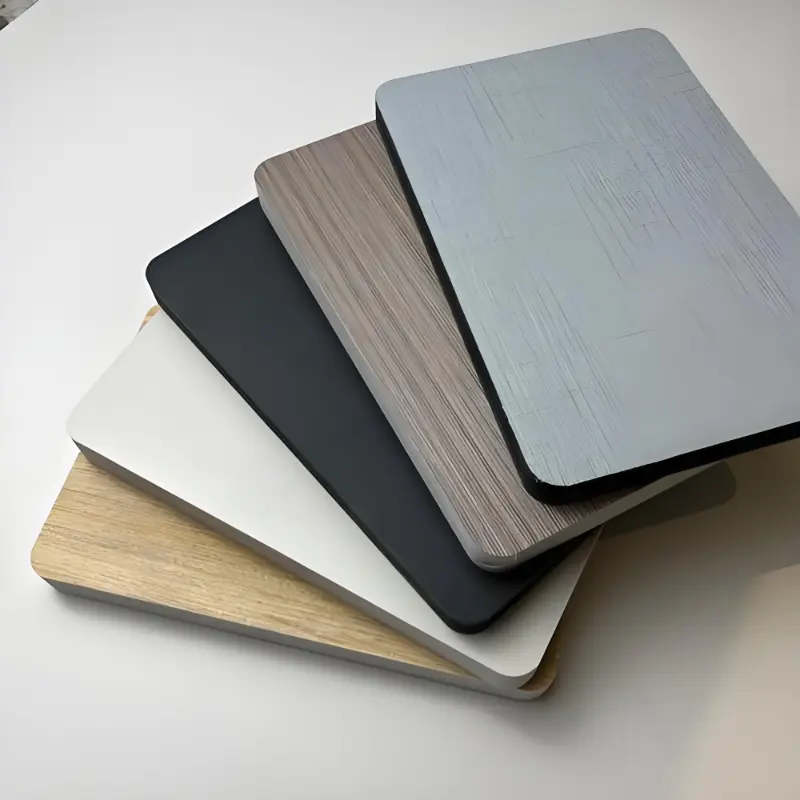
Wood grain finishes provide an alternative visual direction for projects that require a wood-inspired appearance. They can be coordinated with furniture, wall systems, retail interiors, and other architectural elements.
These decorative categories should not be confused with core classifications. A mirror-finish product, for example, describes its surface appearance rather than automatically identifying its core composition or fire classification.
03 Surface Coatings and Their Functions
The coating system influences how the panel surface looks and responds to its surrounding environment. Factors such as ultraviolet exposure, moisture, temperature changes, cleaning requirements, and installation location should be considered when choosing a finish.
PE Coating for General Decorative Applications
PE, or polyester, coating is commonly used for decorative surfaces. It supports a range of colors and finishes and is frequently associated with interior applications and selected outdoor uses where exposure conditions are appropriate.
Its suitability depends on the coating formulation, film thickness, substrate preparation, and actual service environment. A PE-coated panel should not be assumed to provide the same long-term exterior performance as a product specifically developed for demanding outdoor exposure.
PVDF Coating for Exterior Environments
PVDF refers to polyvinylidene fluoride, a fluoropolymer used in architectural coating systems. PVDF coatings are selected for their resistance to weathering and ultraviolet exposure, making them relevant to building facade applications.
Exterior surfaces may experience sunlight, rain, humidity, airborne pollutants, and temperature fluctuations. A suitable coating system helps the exposed surface maintain its intended appearance under the conditions for which it has been designed and tested.
When comparing coating specifications, examine the coating system, pretreatment, film thickness, color consistency, and available performance documentation. Do not rely on the coating name alone to determine a guaranteed service life.
Decorative Coatings and Surface Treatments
Decorative surface technologies offer additional design possibilities beyond standard solid colors.
- Mirror treatment: Creates a reflective appearance for interior decorative applications.
- Brushed treatment: Produces a linear metallic texture that adds visual depth.
- Wood grain printing: Reproduces wood-inspired patterns for coordinated decorative schemes.
- Stone grain effects: Provide a patterned appearance for selected architectural and interior designs.
- Spray coating: Allows different color and finish combinations according to product specifications.
04 Fire Performance and Core Materials
Fire performance is a critical consideration when composite panels are specified for buildings. The core composition can influence how a product behaves under fire exposure, so the intended building use and applicable local regulations must be reviewed before material selection.
Standard PE Core and Fire-Retardant Core
Standard PE cores are primarily associated with general decorative applications. They should not be treated as equivalent to fire-retardant core formulations.
Fire-retardant products use specially formulated materials, which may include mineral-filled compositions or other fire-retardant technologies. Their actual performance must be established through the relevant standardized testing and classification system.
Understanding Common Fire Classifications
Different regions and building codes use different fire-test methods and classification systems. B1 and A2 classifications, for example, are used in certain European and international construction-related contexts, but they do not represent interchangeable performance levels.
When evaluating a product for a regulated project, request documentation that identifies the exact tested product configuration, test method, classification, and applicable limitations.
It is also important to distinguish between the fire performance of an individual panel and that of a complete installed wall or facade system. Insulation, subframes, cavity barriers, joint treatments, fixing methods, and surrounding construction materials can all influence the performance of the overall assembly.
What Should Be Verified Before Specification?
- The exact core composition and product identification.
- The applicable fire-test standard and classification.
- Whether the supplied documentation applies to the requested thickness and configuration.
- Any restrictions related to installation height or building occupancy.
- Local building regulations and project-specific approval requirements.
For high-rise buildings, public facilities, transportation infrastructure, and other fire-sensitive environments, material selection should involve the project's qualified facade designer, fire consultant, or relevant building professional.
05 Applications Across Different Industries
Composite panels are used in different sectors because their flat surfaces, decorative finishes, and lightweight construction can support a wide range of design requirements. The appropriate product depends on the environment, installation method, and functional expectations.
Architectural Exterior Cladding
Exterior cladding is one of the major application areas. Panels can be incorporated into building facade designs to create uniform surfaces, geometric patterns, and contemporary architectural appearances.
PVDF-coated products are often considered for exterior applications because their coating systems are designed for weather exposure. However, facade selection must also account for the supporting structure, wind loads, drainage, thermal movement, fire regulations, and installation details.
Interior Walls and Ceiling Decoration
Interior applications include wall coverings, ceiling features, columns, partitions, and decorative elements in commercial buildings. Mirror, brushed, solid-color, and wood grain finishes offer different options for coordinating with lighting, flooring, furniture, and other interior materials.
For these applications, designers may prioritize surface appearance, color consistency, fabrication flexibility, and compatibility with the proposed fixing system.
Advertising and Signage Production
Signage manufacturers use composite panels as substrates for a variety of commercial graphics and display structures. Their flat surfaces can support printed graphics, mounted letters, decorative elements, and other sign components.
Common examples include:
- Outdoor advertising boards and commercial signs.
- Retail shop signs and storefront displays.
- Exhibition display structures and promotional backgrounds.
- Directional signage and information boards.
- Decorative panels for commercial branding environments.
Retail, Exhibition, and Commercial Interiors
Retail environments frequently require coordinated decorative surfaces that complement product displays and brand identity. Different colors, metallic appearances, and wood-inspired patterns can be incorporated into display walls, counters, partitions, and exhibition features.
For temporary exhibition structures, fabrication convenience and the intended handling conditions may be particularly relevant. For permanent commercial interiors, cleaning methods, surface resistance, and maintenance access deserve additional attention.
Furniture and Decorative Fabrication
Fabricators may also incorporate composite panels into selected furniture components and decorative structures. Applications can include cabinet details, display furniture, wall-mounted features, and interior design elements.
However, panel suitability depends on the required load-bearing function, edge treatment, fixing arrangement, and exposure conditions. A decorative panel should not automatically be used as a structural replacement for materials specifically designed to carry loads.
06 Important Technical Specifications
Technical specifications provide the information needed to compare products accurately. For distributors, fabricators, contractors, and project specifiers, a clear specification sheet also helps reduce misunderstandings during product confirmation and production.
Total Thickness and Aluminum Skin Thickness
Total thickness describes the complete panel, including both aluminum skins and the core. Aluminum skin thickness refers only to the individual metal layers. Both values should be recorded separately.
Skin thickness can influence the panel's fabrication characteristics, surface behavior, and suitability for different processing methods. The correct value should be determined according to the intended use and technical requirements.
Aluminum Alloy and Material Composition
The aluminum alloy designation provides information about the metal composition and associated material properties. It should be confirmed against the manufacturer's technical documentation rather than inferred from the panel's color or appearance.
The core composition is equally important, particularly when fire performance, panel stiffness, or specific regulatory requirements are involved.
Coating and Surface Specifications
Coating specifications may include the coating family, surface pretreatment, coating thickness, color reference, gloss level, and applicable test requirements. These details are useful when a project involves multiple panels that must maintain a consistent visual appearance.
Common Specification Checklist
| Specification | Information to Confirm | Why It Matters |
|---|---|---|
| Total Thickness | Overall panel dimension in millimeters. | Determines dimensional compatibility. |
| Aluminum Thickness | Front and rear aluminum skin thickness. | Helps assess construction and fabrication requirements. |
| Core Material | PE, mineral-filled, or specified fire-retardant composition. | Important for product identification and fire performance. |
| Surface Coating | PE, PVDF, or other specified coating system. | Determines the intended surface protection and appearance. |
| Color and Finish | Color reference, gloss, texture, and finish type. | Supports visual consistency. |
| Dimensions | Panel width, length, and dimensional tolerance. | Supports cutting plans and installation coordination. |
| Performance Documents | Relevant test reports and product certificates. | Helps verify compliance with project requirements. |
In addition to these specifications, project teams should consider flatness, dimensional tolerances, protective film, packaging, and storage conditions. These details can affect how panels are handled, processed, and installed.
07 Fabrication and Installation Considerations
Material selection is only one stage of a successful project. Cutting, routing, bending, fixing, and joint detailing also influence the final appearance and performance of the installed panels.
Cutting and Dimensioning
Panel cutting should follow accurate fabrication drawings and the selected installation layout. The cutting equipment, blade selection, processing parameters, and edge quality should be appropriate for the panel construction.
Accurate measurements help coordinate panel joints, openings, corners, and surrounding architectural elements. Fabricators should also consider material orientation when working with patterned or textured finishes.
Routing and Folding
Some composite panels can be processed through grooving and folding techniques to form corners, returns, and three-dimensional decorative components. The routing depth and remaining material thickness must follow the manufacturer's processing recommendations.
Incorrect grooving may damage the aluminum skin or compromise the intended fold geometry. A suitable fabrication procedure should therefore be established before large-scale processing begins.
Fixing Systems and Support Structures
Different projects use different installation arrangements, including mechanical fixing systems and other engineered support configurations. The choice depends on panel specifications, building structure, wind conditions, project geometry, and local requirements.
Exterior applications require particular attention to movement joints, drainage, ventilation, weatherproofing, and corrosion compatibility between connecting materials. Installation details should be developed by qualified professionals based on the complete facade design.
Handling and Storage
- Store panels on a flat and adequately supported surface.
- Protect decorative surfaces from scratches and impact during handling.
- Keep panels away from prolonged exposure to unsuitable moisture conditions.
- Follow the manufacturer's instructions for protective film removal.
- Use appropriate lifting and handling procedures for large panel formats.
- Check panel identification and specifications before fabrication.
Protective packaging and careful transportation are also important, particularly when panels have reflective or decorative surfaces. Proper handling helps reduce avoidable surface damage before installation.
08 How to Select the Right Product
Choosing a suitable product requires a systematic evaluation of the project environment, functional requirements, appearance, and technical specifications. Instead of starting with a color or thickness, begin by defining what the finished panel assembly must achieve.
Step 1: Define the Application Environment
Determine whether the material will be used indoors, outdoors, in a semi-exposed area, or within a specialized environment. Consider sunlight, rainfall, humidity, pollution, temperature variation, cleaning frequency, and physical contact.
Exterior facades generally require a different evaluation from indoor signage. Similarly, a decorative wall panel and a panel intended for a regulated building envelope should not be specified using identical assumptions.
Step 2: Identify Functional Requirements
Clarify the main function of the finished structure. Is it decorative cladding, a signage substrate, an interior partition, or a component of a larger facade assembly?
Determine whether the project has requirements relating to fire classification, weather exposure, surface durability, weight, dimensional stability, or fabrication methods.
Step 3: Choose the Appropriate Core and Coating
Match the core composition with applicable fire requirements and select a coating system appropriate for the environmental conditions. Decorative appearance and technical performance should be considered together rather than as separate decisions.
Step 4: Confirm Dimensions and Fabrication Compatibility
Check the required panel dimensions, total thickness, aluminum skin thickness, cutting tolerances, and available processing methods. Confirm that the selected format can be integrated with the proposed fixing and support arrangement.
Step 5: Review Technical Documents
Request the relevant product datasheet, material specifications, test reports, and certification documents. Verify that the documents correspond to the exact product being considered, rather than relying on general information about an entire product category.
Step 6: Evaluate the Manufacturer and Supply Details
Product consistency, specification communication, manufacturing capabilities, and customization arrangements are important when coordinating a project or distribution program.
For a manufacturing inquiry, it is useful to provide the following information:
- Intended application and installation environment.
- Required core type and fire-performance classification.
- Total panel thickness and aluminum skin thickness.
- Preferred coating, color, gloss, and surface finish.
- Panel width, length, and required dimensional tolerances.
- Relevant standards, test documentation, and packaging requirements.
Clear technical information enables the manufacturer to assess the requested configuration and identify the appropriate product options. It also makes communication more efficient when multiple specifications or decorative finishes are involved.
09 Maintenance and Service Life
The service life of composite panels depends on several interacting factors, including raw materials, aluminum skin thickness, coating formulation, manufacturing quality, installation details, and environmental exposure. No single specification can independently determine the lifespan of every installed panel.
Routine Surface Cleaning
Regular cleaning helps remove dust, airborne deposits, and other surface contaminants. The cleaning frequency should reflect the surrounding environment and the manufacturer's maintenance instructions.
For routine care, use cleaning materials and methods that are compatible with the specified surface finish. Avoid aggressive chemicals, abrasive tools, or unapproved cleaning procedures that may damage the coating or decorative layer.
Inspection of Installed Panels
Periodic inspections can help identify visible changes before they become more significant maintenance concerns. Inspection should consider the panel surface as well as its surrounding installation components.
- Look for scratches, dents, coating deterioration, or visible discoloration.
- Check exposed joints and sealant conditions where applicable.
- Observe whether any panels show signs of loosening or displacement.
- Inspect surrounding fixings and support components.
- Investigate water ingress or other signs of installation-related problems.
Environmental Factors
Coastal locations may expose exterior materials to salt-containing air, while industrial areas can introduce additional airborne contaminants. Regions with strong sunlight may place greater demands on coating resistance and color retention.
These conditions should be considered during initial specification rather than addressed only after installation. Appropriate material selection, detailing, and maintenance planning work together to support long-term performance.
Why Installation Quality Matters
Even a properly manufactured panel may experience problems if it is installed incorrectly. Inadequate support, unsuitable fasteners, restricted thermal movement, poor joint detailing, or improper handling can affect the finished assembly.
Maintenance planning should therefore include both the panel surface and the complete installation system. Where structural or facade-related concerns arise, inspection and corrective work should be undertaken by qualified professionals.
10 Frequently Asked Questions
The following questions address common technical and purchasing considerations for architectural, decorative, and signage applications.
What is the difference between ACP and ACM?
ACP and ACM are commonly used abbreviations for aluminum composite panel and aluminum composite material. Both terms generally describe a multilayer material consisting of metal skins bonded to a central core. Terminology may vary by manufacturer or market.
What are the main components of a composite panel?
A typical construction includes a front aluminum skin, a central core, and a rear aluminum skin. The specific alloy, thickness, core composition, and bonding system depend on the product specification.
What is the difference between PE and PVDF coatings?
PE coatings are commonly used for general decorative applications and suitable indoor environments. PVDF coatings are fluoropolymer-based systems developed for improved weathering and ultraviolet resistance, making them relevant to exterior architectural applications.
Is a PE core the same as a fire-retardant core?
No. Standard PE cores and specially formulated fire-retardant cores have different compositions and performance characteristics. A product's fire classification must be verified through relevant test documentation rather than inferred from its appearance or product name.
Can composite panels be used for exterior building facades?
Yes, appropriately specified products are used in exterior facade applications. Selection must consider coating performance, core composition, fire regulations, wind loads, fixing systems, drainage, and the requirements of the complete facade assembly.
Are decorative mirror and wood grain finishes suitable for outdoor use?
Suitability depends on the specific surface system and its tested environmental performance. Some decorative finishes are primarily intended for interior applications. The manufacturer's technical information should be checked before specifying them for outdoor exposure.
What thickness should be selected for a project?
The required thickness depends on panel dimensions, support spacing, loading conditions, fabrication requirements, and installation design. Overall thickness and aluminum skin thickness should be evaluated separately. The project designer should confirm the appropriate specification.
Can these panels be cut, routed, and folded?
Many composite panel products can be processed using suitable cutting, routing, and folding techniques. Processing parameters should follow the manufacturer's recommendations to avoid damaging the aluminum skins or compromising the finished geometry.
What documents should be requested from a manufacturer?
Relevant documents may include a product datasheet, technical specifications, material composition information, applicable fire-test reports, coating details, and quality or certification documentation. The documents should match the exact product configuration being purchased.
Can manufacturers provide customized colors and dimensions?
Customization options vary by manufacturer and production capability. Available arrangements may include different colors, decorative finishes, panel dimensions, and product configurations. Specific requirements should be confirmed before production.
How should composite panels be maintained?
Follow the manufacturer's cleaning instructions and use compatible cleaning products. Periodically inspect the surface, joints, fixings, and surrounding installation components. Cleaning frequency should reflect local environmental conditions.
Make an Informed Material Selection
Choosing the right composite panel involves balancing structural specifications, core composition, coating performance, appearance, fabrication requirements, and installation conditions. Each project has its own priorities, so a product that works well for interior signage may not be suitable for an exterior facade or a building subject to specific fire regulations.
For architects, contractors, signage manufacturers, and material distributors, clearly defining the application and technical requirements is the most effective starting point. Reviewing detailed specifications and relevant test documentation helps ensure that the selected material matches the intended use.
As a manufacturer of acrylic sheets, PVC foam boards, and composite panels, Be-Win offers different panel categories, including PE, fireproof, PVDF, mirror, and wood grain options. OEM and ODM services support customization requirements involving sizes, colors, and designs.
Share your application, preferred finish, dimensions, and technical requirements with our team to discuss suitable product configurations and manufacturing options.